Eger
3 levels · 23 stops · Language: English, Hungarian
After the Ottoman occupation ended in 1687, Eger’s bishops became the town’s builders. Ferenc Barkóczy began the Lyceum in 1761, and János László Pyrker later commissioned the cathedral at the foot of the hill. The walk also takes in the curved Baroque front of the Minorite church on Dobó István tér, a 40-metre minaret and the wine cellars of Szépasszony-völgy.
What you will see
The stops of the first level. The full text is in the app.
Building
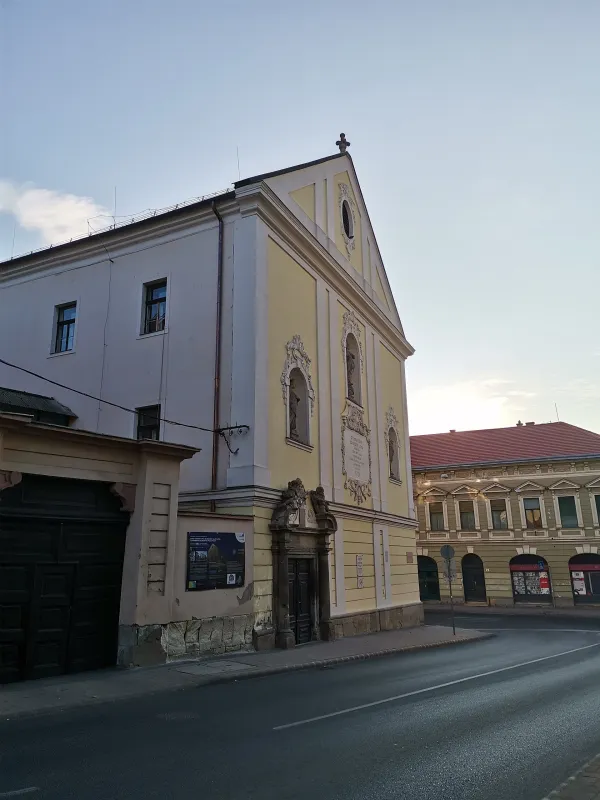
Dobó István Grammar School
In 1921 the school took the name of István Dobó, the defender of Eger Castle.
Photo · Szabolcs · CC BY-SA 4.0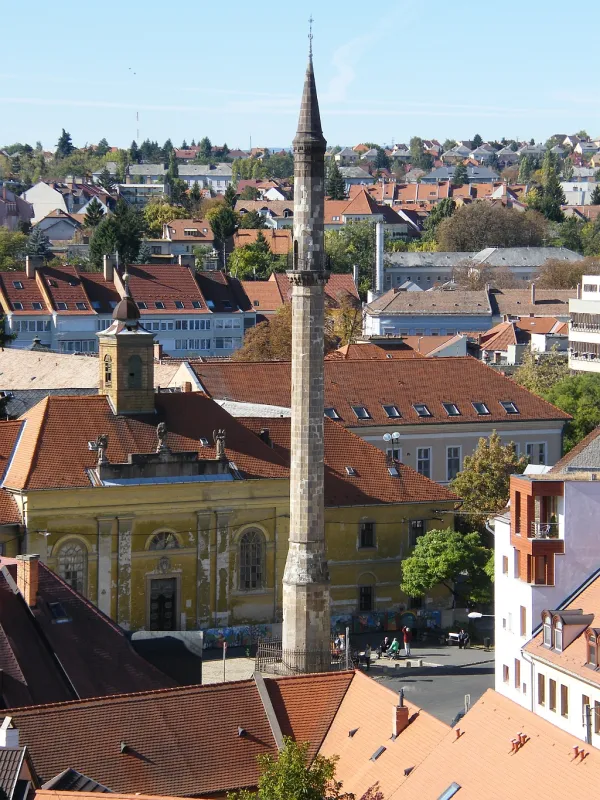
Landmark
Eger Minaret
The tower rises 40 metres. Of the three minarets left in Hungary from the Ottoman era, this one is the tallest and the best preserved.
Photo · Mykee78 · CC BY-SA 2.5 hu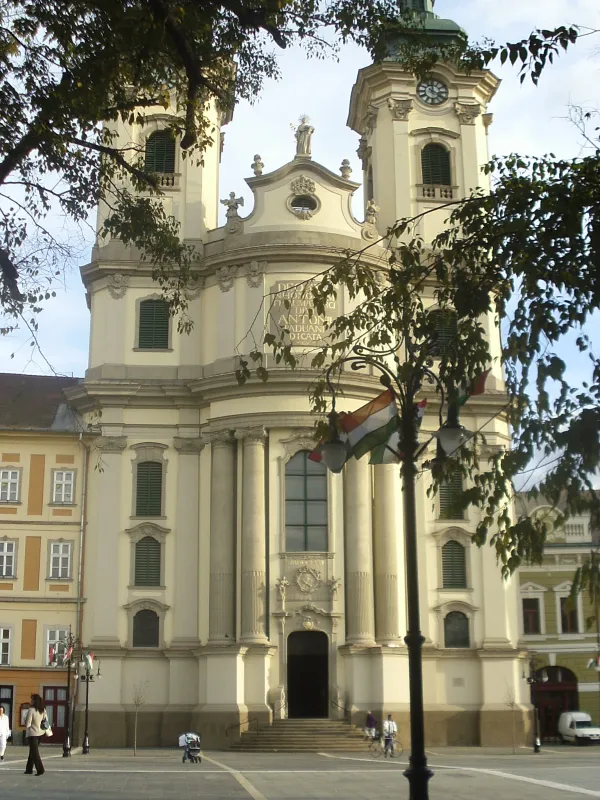
Church
Minorite Church
Between the two towers the façade curves outwards, and this is the only Baroque church in Hungary with a curved front.
Photo · Rakás · CC BY-SA 4.0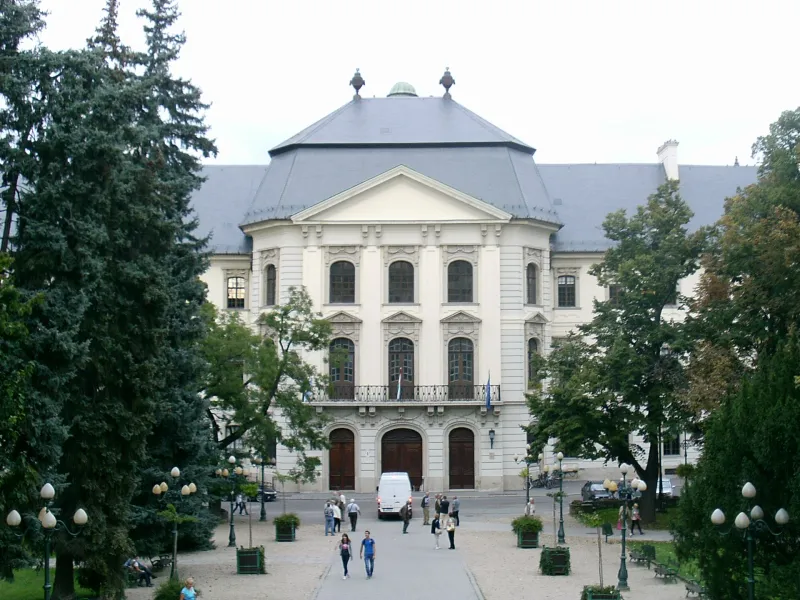
Landmark
Lyceum, Eger
In 1949 the college faculty of Kossuth Lajos University in Debrecen moved into the building. Today it is the main building of the university that grew from that faculty.
Photo · Rakás · CC BY-SA 4.0
Church
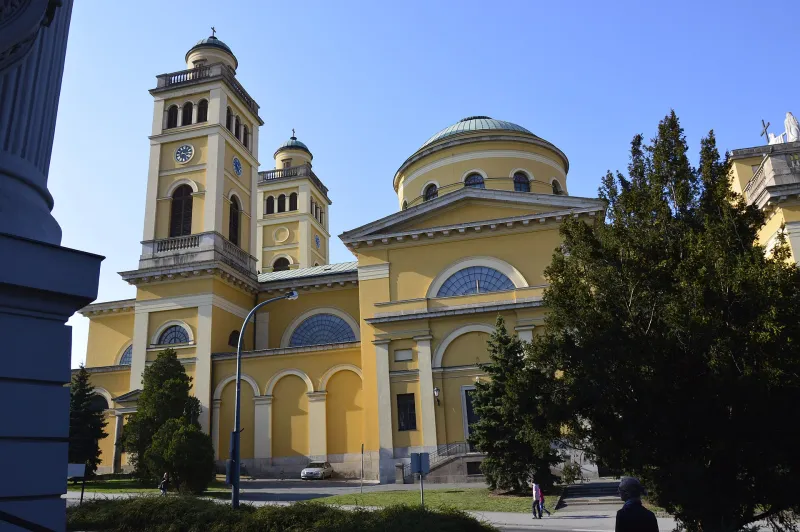
Cathedral Basilica of St. John the Apostle
Archbishop János László Pyrker, who arrived in Eger in 1827, commissioned the cathedral.
Photo · krokophoto · CC BY-SA 2.5 hu
Landmark
Valley of the Beautiful Woman
Nearly two hundred wine cellars line this valley, the largest continuous area of cellars in Eger.
Photo · Globetrotter19 · CC BY-SA 3.0
Free sample
Have a listen
One complete stop, exactly as it plays in the app.
Dobó István Grammar School
In 1921 the school took the name of István Dobó, the defender of Eger Castle.
Text
The former Jesuit college now houses the Dobó István Grammar School. Its forerunner, a four-class lower secondary school, started teaching here in the 1891–92 school year, by which time the building was back in the town’s hands. At the end of the 1936 school year it became the Dobó István Grammar School, and Latin was taught from then on. In 1949 it merged with the Cistercian Grammar School, and a year later the English Ladies’ girls’ school was attached to it as well. Until 1954 it was the only grammar school in Eger.
Canon György Foglár gave the Jesuits a larger plot in the town centre in 1749, and the foundation stone of the new building was laid on 1 July 1750. It was finished in 1754.
Levels of discovery
Each level builds on the previous one and includes all its stops. Every level is included in the purchase.
- 1The essentials
- 2Getting to know the place
- 3In depth
- 4–5Not available for this place
Getting there
- MiskolcBy train with a change, usually at Füzesabony; from there about 20 minutes to Eger.
- DebrecenBy train, changing at Füzesabony; from there about 20 minutes to Eger.
- BudapestDirect train from Keleti station in under 2 hours; direct buses also take just under 2 hours.
Parking: Parking fees in the centre vary by zone; garages on Kertész utca and Katona tér, free car parks within walking distance.
The full guide is in the app
Every level of Eger and the text of every stop, with an offline map. One purchase, in the language you choose.
Google Play coming soon